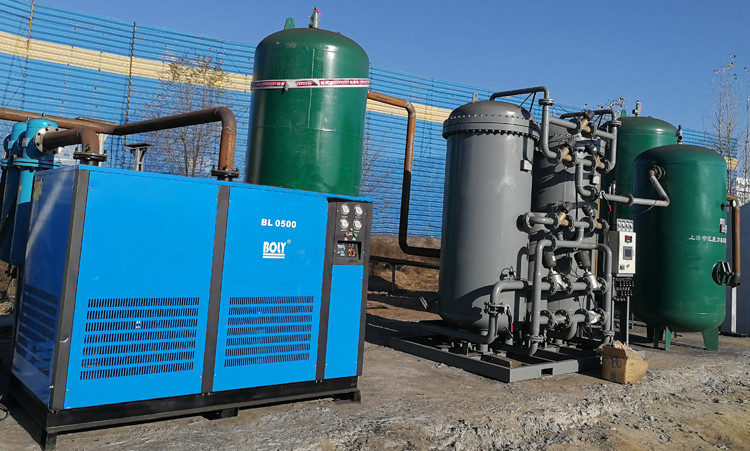
The first is used for medical purposes. Some respiratory diseases or chronic obstructive pneumonia may require oxygen. Of course, other patients with severe hypoxia, such as gas poisoning, also need medical oxygen generators.
The second is health care functions, such as middle-aged and elderly people, pregnant women and college students with high pressure. Short-term hypoxic responses may be present after severe physical exertion or severe cerebral energy expenditure. The use of a medical oxygen concentrator can prevent the sequelae caused by short-term hypoxia.
The third category is the main equipment of some small and medium-sized hospitals. For example, some remote mountainous areas and plateaus, these areas are relatively hypoxic. If the medical hypoxia machine is not prepared, it may cause unnecessary damage when it needs to be used.
A common type is a pressure swing adsorption oxygen generator, which extracts oxygen from the air. The medical oxygen generator is filled with molecular sieve, and the surface area of each gram of molecular sieve can reach 800-1000m 2/g. In the case of decompression of the molecular sieve, the previously adsorbed nitrogen gas is discharged into the air again. When repressurized, nitrogen can be adsorbed for the production of oxygen. Therefore, the medical oxygen generator can realize periodic cyclic oxygen generation, which is a dynamic process.